Skip to content

Treatment
There are no medications that can treat the condition being purely anatomical. Your baby may need to be admitted to the ICU, however, and given some medications to stabilize their condition and prepare them for surgery.
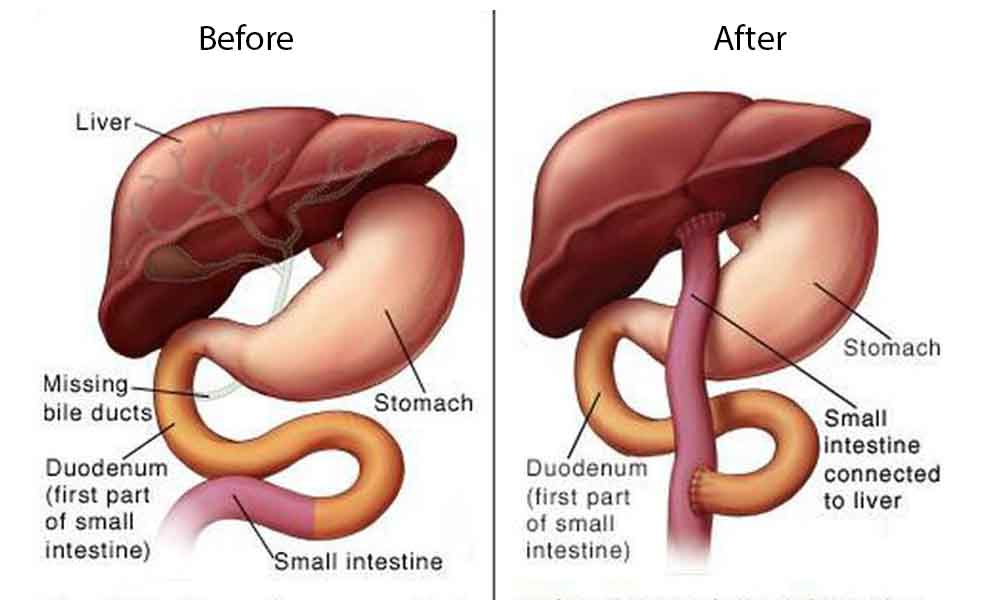
The classical treatment of the condition is an operation called Kasai operation, which consists of the removal of the narrow or atrophic biliary passages and then connecting the patent ones directly to the small intestines. This allows bile to pass into the small intestines again. The procedure is safe, but before performing it, the surgeon may need to do another cholangiography (imaging of the biliary tract) to confirm the condition in the operating room. The operation itself can be modified to suit the degree of patency of the biliary tree.
Following the operation, your baby can be fed breast milk with no problems. In fact, breast milk is beneficial to digest fats at this critical stage after the operation. You can also feed them formula milk after consulting your surgeon. Surgeons performing the operation are called pediatric surgeons and they will guide you before the operation and during recovery. Your doctor may also prescribe antibiotics for your baby to protect against inflammation of the bile passages postoperatively as well as another medication called UDCA to improve bile flow, but neither will be used for long periods.
Even though the operation is commonly done worldwide with high success rates nowadays, complications can occur. They include infection, failure of the connection and liver disease on the long term. Therefore, your doctor will need you to follow-up with them following the operation. Regular clinical examination and lab tests may be needed in the first few months after the procedure. You will also be asked to look for any danger signs including jaundice and changes of the color of urine and stools. You should also tell your doctor if your baby experiences any severe abdominal pain or if the wound looks abnormal.
If your baby develops inflammation of the biliary tract, they may receive steroids to tone down the inflammation and prevent reocclusion of the tract. On the long-term, there is evidence that liver disease may occur even if the operation is successful. Therefore, your baby may need to undergo regular lab tests for liver function for the rest of their childhood and possibly for lifetime. This doesn’t mean that they won’t enjoy a high quality of life, for they will be able to perform normal daily activities like any other child, but extra precautions regarding testing will be needed to detect any abnormality and deal with it as soon as possible. You can raise your concerns and inquiries with your doctor and make sure that they will do their best to help you and your child.