Skip to content
Diseases Affecting The Bile Ducts
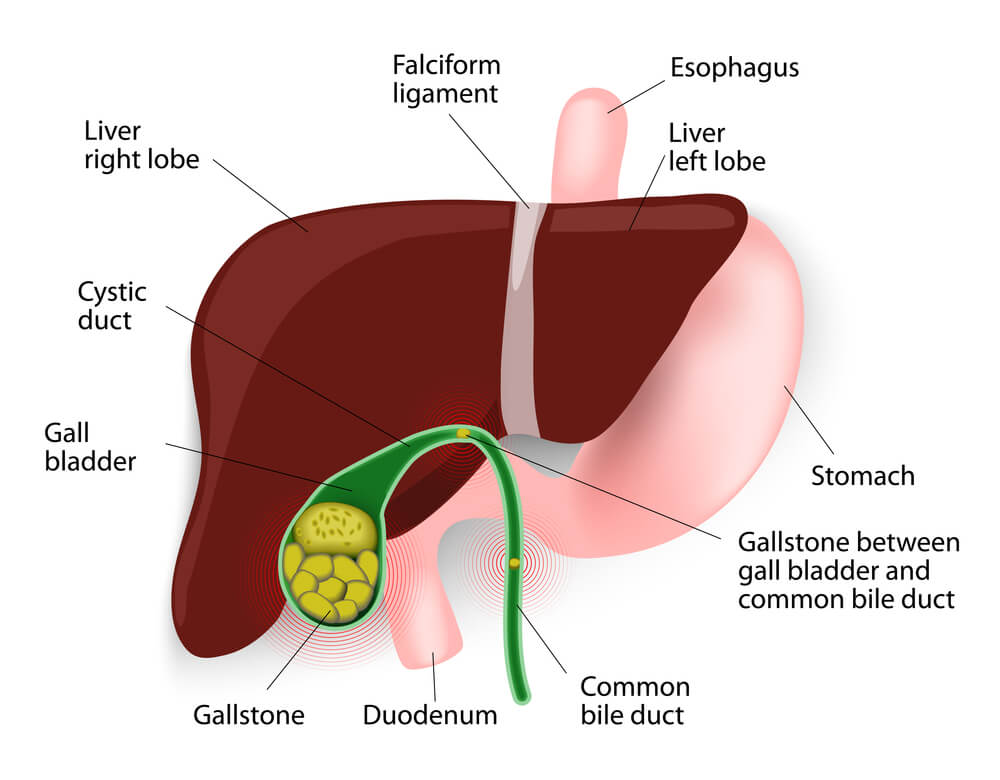
The bile ducts need to be patent to ensure the continuous flow of bile through them. The most common diseases affecting the bile ducts include:
- Gall stones: Gall stones originate in the gall bladder. They are formed from cholesterol mainly and are more common in females in their forties, especially when they are obese or when there is a rapid weight loss. Stones are usually asymptomatic and may cause chronic inflammation of the gall bladder, but when a stone dislodges and obstructs the common bile duct, it causes the accumulation of bile above it, causing jaundice.
- Biliary atresia: Biliary atresia is a congenital disease, which means that it starts when the baby is still inside the uterus. It results from the partial or total failure of the development of the biliary tree. This condition is usually associated with jaundice at birth and needs urgent surgical treatment.
- Biliary tree cancer: Biliary tree cancer or cholangiocarcinoma is one of the commonest cancers of the liver and biliary tract. It usually develops in old age and can cause jaundice and weight loss.
- Biliary tract inflammation (cholangitis): Cholangitis is perhaps the most common disorder affecting the biliary tract. It occurs as a secondary response to stones. When a stone occludes or passes through the biliary tract, it causes some inflammation along its path. The main symptom of patients with cholangitis is pain that is found in the upper right abdomen, where the liver and gallbladder are.
- Pancreatic head cancer: Although pancreatic head cancer is less likely to be the cause of symptoms than other conditions like bile duct stones, it is usually the cause of jaundice in the elderly due to its external compression of the common bile duct.