Skip to content
Compression Test

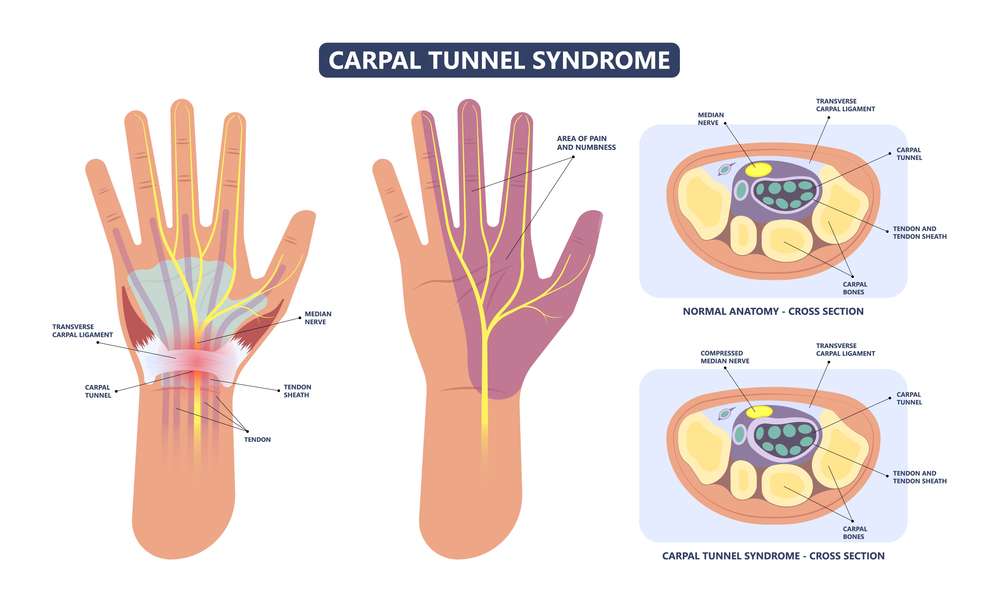
The Carpal Compression test is considered amongst the most accurate diagnostic tests for Carpal Tunnel syndrome. It is conducted by applying pressure over the carpal tunnel for 30 seconds firmly; if this action causes pain or paresthesia in the patient, the test is considered to be positive.
Other than these tests, the physician may also advise the patient to undergo an MRI, Ultrasonography, or Electromyography to evaluate the extent of their condition. MRI is particularly advised when the patient has space-occupying lesions in their carpal tunnel and is being suggested a surgery to remove it. While the presence and extent of a lesion can also be detected by conducting Ultrasonography, what makes this additionally beneficial is that it can also help the physician identify any difference in the cross-section of the median nerve. It may also be used to guide the doctor when they are injecting steroid injection into the patient’s carpal tunnel.
Another set of investigations that have now become popular the new basis for the diagnosis of Carpal Tunnel Syndrome is the Electromyography and nerve conduction studies. The gold standard of diagnosing Carpal Tunnel Syndrome includes identification of signs and symptoms pointing to Carpal Tunnel in association with abnormalities seen on Electrophysiological testing.