Signs & Symptoms
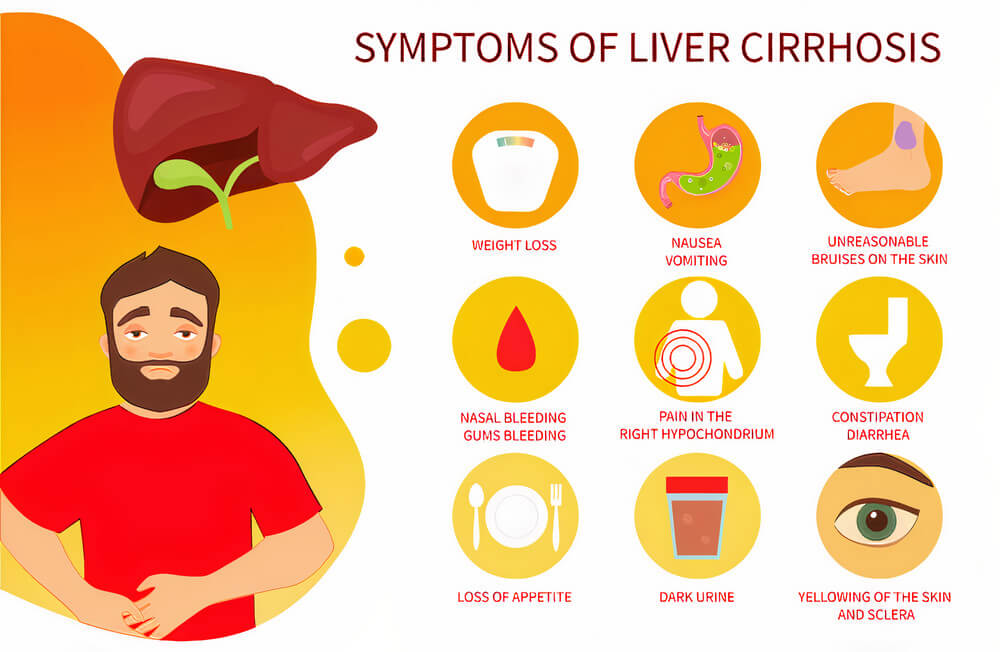
The symptoms of cirrhosis are not always the same. Patients sometimes have histologic differences in the liver but display no symptoms. Thus, the histologic findings are not always correlated with the clinical aspects of this particular condition. Some patients are asymptomatic. Others experience the most severe symptoms of the disease and have a reduced life expectancy.
Most signs of cirrhosis are associated with an abnormal synthetic function by the liver. For example, the liver synthesizes coagulation factors. This function is affected in cirrhosis, and patients have several coagulation problems. Other symptoms are derived from a reduction of the capacity to detoxify the organism from waste materials. That is the case of hepatic encephalopathy, in which there’s a buildup of ammonia in the blood and other substances. There is also portal hypertension, which causes a stagnant blood flow in veins, followed by esophageal varices and subsequent bleeding.
Signs and symptoms of portal hypertension include gastrointestinal bleeding due to esophageal varices, an increase in the liver’s size, abdominal pain, and liquid buildup in the abdominal cavity (ascites). Ascites is a predominant symptom of cirrhosis and has a few clinical signs, including bulging flanks, abdominal distention, and a mobile dullness area in the abdomen that changes its location when the patient changes position.
Hepatic encephalopathy is perhaps the most severe complication of cirrhosis. The intensity of the symptoms is variable, and there’s a scale that measures the grade of the complication. We can have a subclinical encephalopathy in grade 0, with minimal memory changes, mild cognitive issues, and small concentration problems. In grade 1, there’s a significant decrease in attention levels, sluggish thoughts, changes in the sleep pattern, depression or euphoria, and sometimes mild confusion. In grade 2, the problem is more severe, with lethargy, inappropriate behavior, and personality changes. Grade 3 hepatic encephalopathy features marked confusion, amnesia, complete disorientation, and incomprehensible speech. The final stage, or grade 4, is coma, in which patients can respond to painful stimuli or not.
Additionally, most patients also develop additional problems that include muscle wasting, anorexia, fatigue, jaundice, palmar erythema, finger clubbing, and unexplained weight changes.