Skip to content
Conclusion

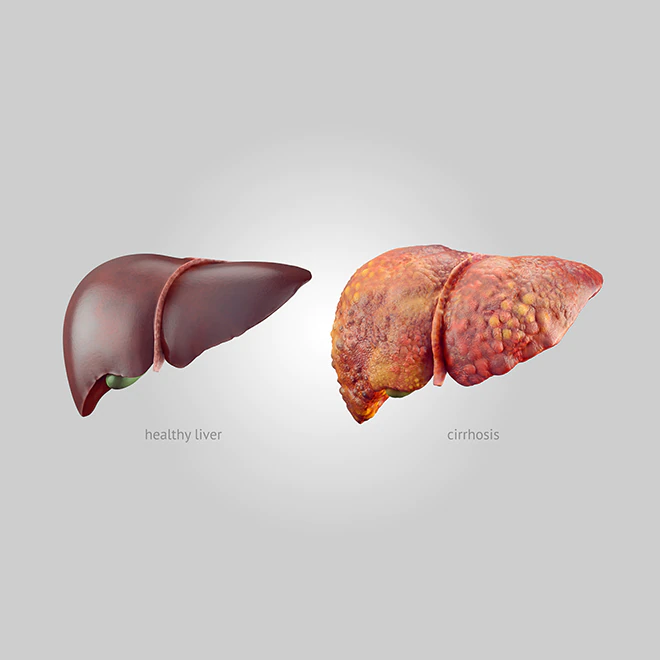
Cirrhosis is not a disease by itself but rather a condition triggered by many diseases. It is an alteration in the liver’s normal architecture, which often starts with liver fibrosis and goes forward into cirrhosis, portal hypertension, and other complications.
The number one cause of cirrhosis is hepatitis C, closely followed by alcoholic liver disease. Unlike liver fibrosis, it is not reversible, and the condition cannot be cured. Instead, doctors recommend treatment based on the patient’s current health conditions to prevent complications.
Monitoring these patients is essential, even if they are apparently stabilized. It is particularly important to rule out liver cancer with ultrasound scans and esophageal varices with endoscopy. And throughout the disease, we should also highlight the importance of nutrition, especially in patients with a risk of protein malnutrition and those with severe loss of appetite.
References
Tsochatzis, E. A., Bosch, J., & Burroughs, A. K. (2014). Liver cirrhosis. The Lancet, 383(9930), 1749-1761.
D’Amico, G., Morabito, A., D’Amico, M., Pasta, L., Malizia, G., Rebora, P., & Valsecchi, M. G. (2018). Clinical states of cirrhosis and competing risks. Journal of hepatology, 68(3), 563-576.
Ebrahimi, H., Naderian, M., & Sohrabpour, A. A. (2016). New concepts on pathogenesis and diagnosis of liver fibrosis; a review article. Middle East Journal of digestive diseases, 8(3), 166.