Skip to content

Types of Diabetes
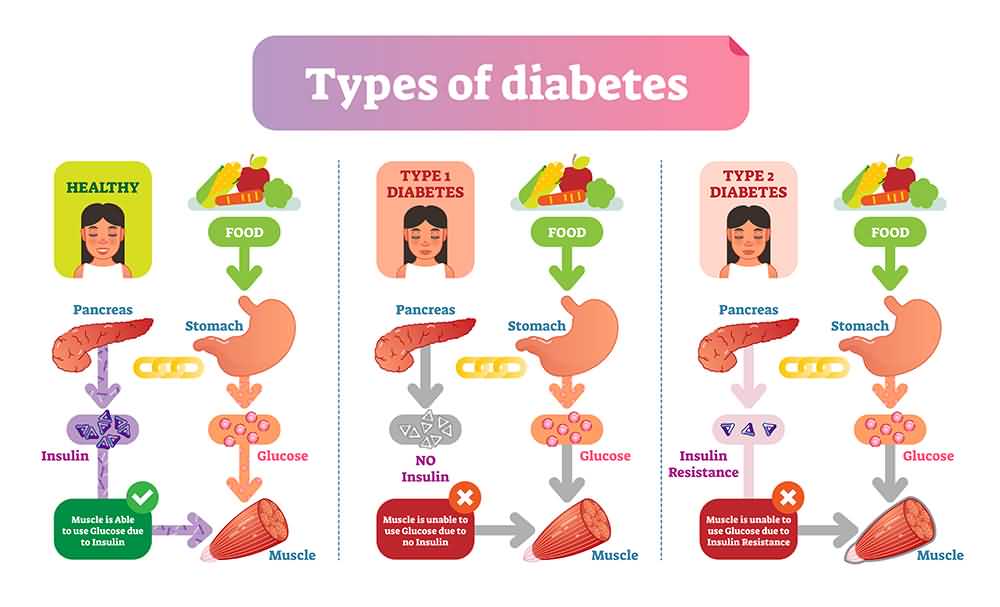
There are two major forms of diabetes. They are referred to as Type 1 and Type 2 diabetes.
In the past, Type 1 diabetes was termed Insulin-dependent diabetes mellitus or juvenile-onset diabetes( this latter term came about because Type 1 diabetes is more prevalent in children).
Type 2 diabetes is more prevalent in adults and is defined (formerly) as Insulin-independent diabetes.
Type 2 Diabetes
Type 2 diabetes is regarded as the most common type of diabetes, mostly prevalent in adults. It is a chronic problem in which the blood glucose (sugar) of the affected individual can no longer be regulated.
Experts advance two reasons for this situation. The first is that the cells of the body become resistant to insulin (attain insulin resistance). As mentioned earlier, insulin works primarily to move sugar out of the blood and into the cells where the sugar is needed.
Insulin resistance means that the patient’s system requires the production of more insulin to move blood sugar into the cells. It does this with increasing difficulty and this situation leads to higher sugar levels in the body. The pancreas also suffers in the process, of becoming overburdened and unable to produce insulin, leading to the failure of the organ.
Signs and Symptoms of Type 2 Diabetes
It must be noted that this form of diabetes occurs over a long stretch of time, with signs/symptoms often remaining subtle/not evident until the condition manifests. The more common signs include the following:
- Experiencing Fatigue.
- Suffering from the effects of frequent urination.
- Excessive thirst.
- Having blurred or cloudy vision.
- Having injuries or wounds that take a long time to heal.
- Experiencing tingling or numbness in the feet.
- Male patients suffering from Erectile dysfunction.
- Affected individuals have dark spots under the armpits and in the vicinity of the groin.
Causes of Type 2 Diabetes
Type 2 Diabetes is sometimes termed a lifestyle illness. This is so because treating the condition requires the affected individual to make adjustments to lifestyle choices/patterns, especially regarding food consumption and exercise.
The following are the common causes of type 2 Diabetes:
-
Race and Ethnicity
Some ethnic groups have a higher probability of developing type 2 Diabetes than others. In that regard, African Americans, Latinos, Native Americans, Asian Americans, and Pacific Islanders are all at increased risk.
-
Eating habits
Individuals who consume too much sugar and carbohydrates are more predisposed to developing Type 2 Diabetes. In addition, people who eat or drink foods with high amounts of artificial sweeteners are also at risk.
-
Individuals who live a sedentary lifestyle i.e a lack of or little exercise
A lack of exercise means that the body does not reach optimal levels of performance, hence the tendency to store sugars and fats increases. This situation is conducive to developing the condition.
-
Living in stressful situations
Everyday living conditions can increase the risk of individuals developing Type 2 diabetes. Often people who are stressed may turn to activities that they think help them to relieve stress.
These activities may include binge eating/drinking, smoking, and taking medications among other measures. These acts cumulatively put pressure on the body’s ability to break down sugars, which may accelerate the development of Type 2 diabetes.
-
Obesity
Obesity is one of the leading causes of Type 2 Diabetes. It is not only one of the common ones but also ranks as being preventable.
The reason that obesity poses a higher risk of developing diabetes is that the extra weight creates insulin resistance. It is also important to note that diabetes occurs more in obese individuals, who store fat around the belly other rather than fat found in other parts of the body.