Skip to content
Diagnosis of galactosemia

- Newborn screening program: The doctors use this screening to detect metabolic disorders that don’t appear at birth. This screening is too important because the earlier you treat the baby, the less the baby has dangerous complications. The doctor takes a blood sample from the heel of the baby. The blood sample shows a high level of galactose and a low level of GALT enzyme.
- Genetic test: Positive blood test makes the doctor go to a genetic test to confirm the diagnosis.
- Urine-reducing substances test: the doctor detects reducing substances like galactose in the urine.
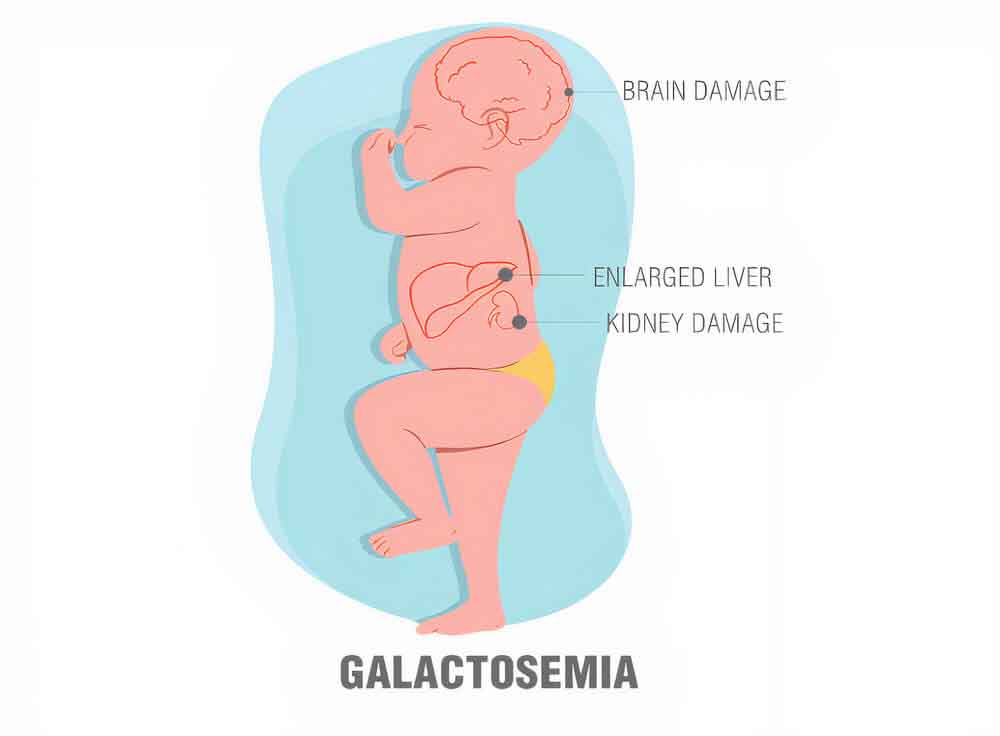
- Imaging tests: doctors use CT (computed tomography) or MRI (Magnetic resonance imaging) to detect changes in the brain tissue. The child may show cerebral atrophy. Ultrasonography detects ascites and jaundice.
- Urine analysis: the doctor detects proteins and amino acids in the urine. Also, there is a high of bilirubin that indicates jaundice.
- Liver function test: to detect the state of liver healthy or not
- Kidney function tests detect the state of the kidney, healthy or not.
- Weight follows up measures the baby’s weight and detects weight loss. The doctor uses growth curves to detect growth failure.
- Hormonal level: to measure the level of FSH and gonadotropins in adult girls
- Observation: the doctor asks the parent to observe the learning skills and neural functions of the baby. If he suffers from difficulty in speech or language, they should see the doctor.