Skip to content
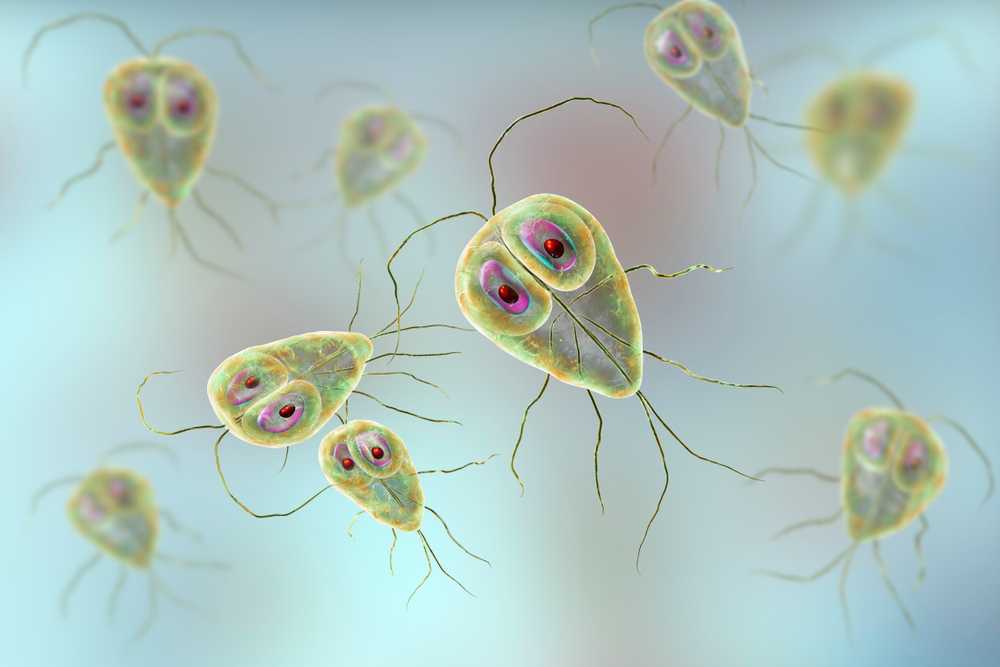
Giardia is an intestinal flagellate, which means that it is a form of the parasite that consists of one cell that moves around using a hair-like projection like a snake. It is a microscopic organism that lives in the intestines and never reaches the blood. Giardia lives in nature in unclean water, especially in ponds and water tanks that are rarely cleaned. It is excreted in the stools of infected persons and can cause infection via drinking unclean water.
Giardia exists in two forms, one of them is called trophozoites, which is their active form, and the other is called cysts. Cysts are their form in nature and the one that is excreted in stools, which is resistant to temperature changes and atmospheric air. People who get infected with giardia usually ingest the cyst form, which then becomes trophozoites in the body.
Giardia is commonest among people living in developing countries, and if you live in a developed country, you may get infected if you travel there regularly.
Water is not the only source of infection with giardia, and some people can get infected through food prepared by food handlers who do not follow strict hygienic standards. In addition, it is common among family members to get infected by each other. It is a highly infectious organism, especially in children and those who have weak immunity.