Skip to content

Liver function: What does the liver do?
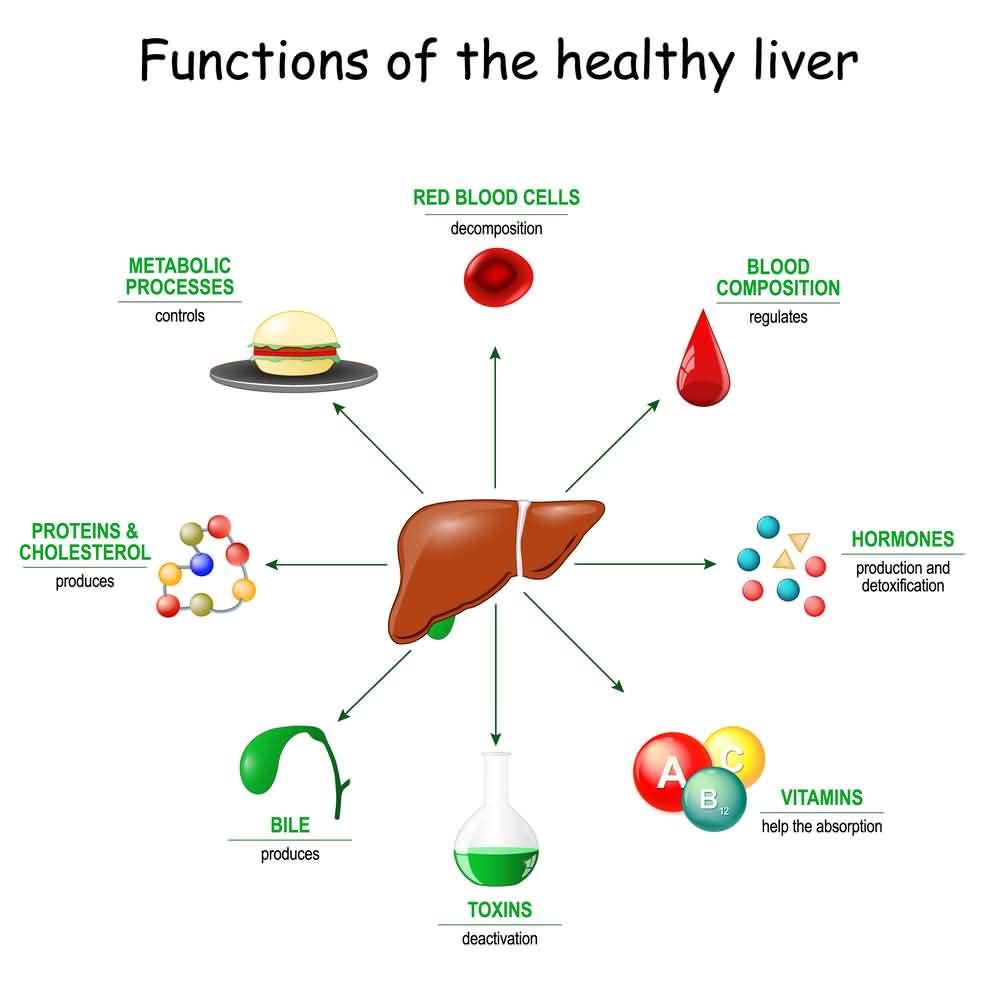
You may wonder why is it that the liver repeats the same microscopic structure of the hepatic lobules over and over again. It’s a very large organ, but it is pretty repetitive on the inside. That is because the liver functions as a vast colander that receives the blood and cleanses it from toxins.
Unlike a colander, the liver does not use a mechanical approach to detox the blood. Instead, it uses many chemical reactions. A large amount of blood must contact the hepatocytes, flowing continuously to trigger the chemical reactions needed to detox the blood.
In each hepatocyte, there are enzymes. They are small proteins that react with toxic substances and convert them into inactive substances easily transported and eliminated through the urine. In other cases, the liver can catch the toxic substances, convert them with enzymes, and drain them into the bile ducts to eliminate them through the gallbladder into the intestines.
Interestingly, the liver does not only clean the circulating blood from toxins. It also performs security screening of newcomer substances right after being absorbed in the gastrointestinal system. Every nutrient, drug, and toxin absorbed in your gut travel through the same method of blood vessels, known as the portal system. These blood vessels go directly to the liver before reaching another organ. After the liver screens these new substances and clears them, they get the heart and start circulating throughout the body. This is known as the first-pass effect or first-pass elimination, which is why many drugs can’t be administered orally. They would be destroyed or inactivated by the liver right after being absorbed.
The liver performs an important cleaning function, but it is also essential to store carbohydrates. It creates new proteins, mainly albumin and coagulation factors. It activates some vitamins and nutrients and contributes to a healthy balance of fatty acids in the blood. All of these functions are performed inside the hepatocyte, and there are millions of them performing hundreds of chemical reactions simultaneously. Thus, it is not an overstatement to say that the liver is one of the most important organs in the abdominal cavity.
References
Jenkins, G., & Tortora, G. J. (2016). Anatomy and physiology. John Wiley & Sons.
Boron, W. F., & Boulpaep, E. L. (2016). Medical physiology E-book. Elsevier Health Sciences.
Hall, J. E., & Hall, M. E. (2020). Guyton and Hall textbook of medical physiology. Elsevier Health Sciences.