Skip to content
10) Surgery
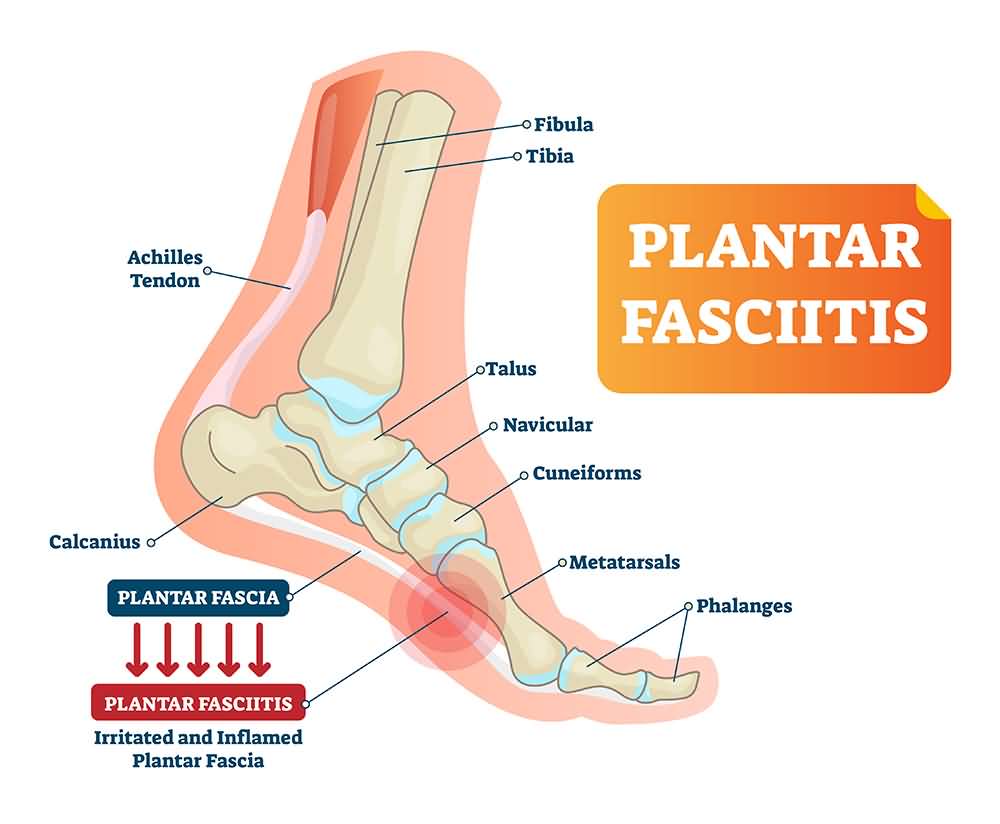
The first step that comes with the treatment of Plantar Fasciitis is always to go for medications and other ways to conservatively manage the symptoms. This is often enough for the healing process to be initiated as the person recovers in a duration of six to twelve months. However, in individuals where the symptoms last for more than a year despite getting all the needed medications and using all the techniques, these individuals are assessed to get surgery. Before such individuals are taken for surgery, there is also a nerve conduction study and electromyographic studies carried out to check whether the posterior tibial nerve is functioning well or not.
The procedure that is carried out is through an open or endoscopic release of the plantar fascia. There is very little need of incising the soft tissues in this technique. Moreover, an excellent amount of structures are visible through the incision with very less pain experienced by the patients after the surgical procedure is done. This endoscopic release procedure is only avoided if the posterior tibial nerve is found to be compressed.
Another procedure that is carried out is the ‘Open Partial Plantar Fascia Release.’ In this surgical procedure, the first branch of the lateral plantar nerve is released. A large percentage of people who have undergone this procedure have been satisfied with the results. It involves the complete division created in the palmar fascia and hence comes with a lot of postoperative complications such as; hammar toes, secondary hallux valgus, and also pes planus.
References
- Buchanan BK, Kushner D. Plantar fasciitis.
- Tahririan MA, Motififard M, Tahmasebi MN, Siavashi B. Plantar fasciitis. Journal of research in medical sciences: the official journal of Isfahan University of Medical Sciences. 2012 Aug;17(8):799.
- Schwartz EN, Su J. Plantar fasciitis: a concise review. The Permanente Journal. 2014;18(1):e105.
- Cutts S, Obi N, Pasapula C, Chan W. Plantar fasciitis. The Annals of The Royal College of Surgeons of England. 2012 Nov;94(8):539-42.
- Thong-On S, Bovonsunthonchai S, Vachalathiti R, Intiravoranont W, Suwannarat S, Smith R. Effects of strengthening and stretching exercises on the temporospatial gait parameters in patients with plantar fasciitis: A randomized controlled trial. Annals of rehabilitation medicine. 2019 Dec;43(6):662.
- Boonchum H, Bovonsunthonchai S, Sinsurin K, Kunanusornchai W. Effect of a home-based stretching exercise on multi-segmental foot motion and clinical outcomes in patients with plantar fasciitis. Journal of Musculoskeletal & Neuronal Interactions. 2020;20(3):411.
- Thing J, Maruthappu M, Rogers J. Diagnosis and management of plantar fasciitis in primary care. British Journal of General Practice. 2012 Aug 1;62(601):443-4.
- Aqil A, Siddiqui MR, Solan M, Redfern DJ, Gulati V, Cobb JP. Extracorporeal shock wave therapy is effective in treating chronic plantar fasciitis: a meta-analysis of RCTs. Clinical Orthopaedics and Related Research®. 2013 Nov;471(11):3645-52.
- Wheeler PC. The addition of a tension night splint to a structured home rehabilitation programme in patients with chronic plantar fasciitis does not lead to significant additional benefits in either pain, function, or flexibility: a single-blinded randomized controlled trial. BMJ open sport & exercise medicine. 2017 Jun 1;3(1):e000234.
- Wheeler P, Boyd K, Shipton M. Surgery for patients with recalcitrant plantar fasciitis: good results at short-, medium-, and long-term follow-up. Orthopaedic Journal of Sports Medicine. 2014 Mar 20;2(3):2325967114527901.